Outlooks
Medium-Term Prospects: Bitcoin (BTC/USD)
The Future Favours The Informed
Bitcoin has entered a very different phase of its development.
For much of its history, Bitcoin was viewed as a speculative experiment. It was largely ignored by institutions, misunderstood by policymakers and dismissed by many within traditional finance. Today, however, the landscape looks markedly different.
Spot Bitcoin exchange-traded funds now exist in major financial markets. Public companies hold Bitcoin on their balance sheets. Pension funds, asset managers and family offices increasingly discuss Bitcoin within the same conversations as equities, bonds and commodities. Governments around the world continue to debate digital asset regulation, while developers continue building infrastructure that did not exist just a few years ago.
As a result, Bitcoin is no longer simply a technology story. It has become a monetary story, an investment story and increasingly a geopolitical story.
The purpose of this report, and future reports, is not to predict tomorrow’s price action. Instead, it is to examine the medium-term environment facing Bitcoin, assess the forces currently shaping the market and explore what investors should be paying attention to over the coming months.
Understanding The Current Market Environment
One of the biggest mistakes investors make is viewing Bitcoin purely through the lens of price.
Price is important, but price is ultimately a reflection of deeper forces operating beneath the surface.
At Alderlux, we often focus on percentage-based movements and market structure rather than nominal price levels. This helps remove psychological bias and encourages a more objective assessment of market behaviour.
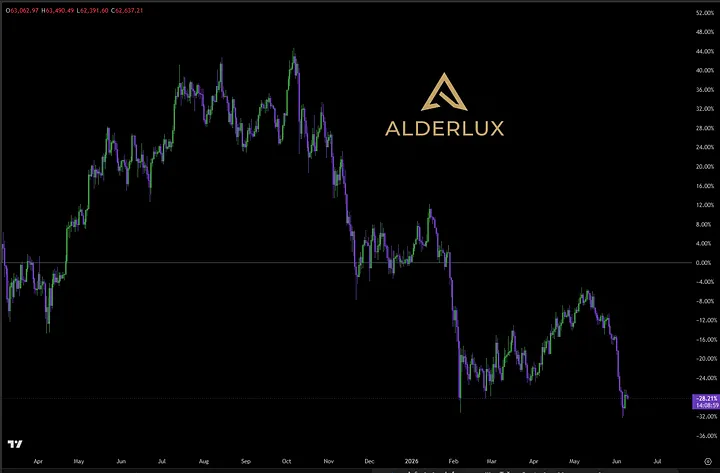
To understand where Bitcoin may be heading, investors must first understand the broader environment in which it operates.
Several major forces currently dominate the investment landscape:
- Global liquidity conditions
- Interest rate policy
- Sovereign debt expansion
- Institutional adoption
- ETF capital flows
- Regulatory developments
- Investor psychology
These factors are interconnected.
Bitcoin does not operate in isolation. It exists within a global financial system and increasingly responds to the same macroeconomic conditions that influence traditional markets.
When trading Bitcoin, it is important to recognise that major economic and geopolitical events often create volatility rather than direction. Markets are inherently forward-looking and frequently price in expected outcomes long before they occur. As a result, the event itself is often less important than how the outcome compares to market expectations.
This explains why Bitcoin can sometimes move contrary to what headlines might suggest. Whilst major events can trigger sharp short-term price movements, the broader market trajectory is often determined by positioning, liquidity and expectations that were established well in advance.
The Global Debt Problem
One of the most significant long-term themes supporting the Bitcoin thesis remains the unprecedented growth in global debt.
Governments around the world continue to accumulate debt at a pace rarely seen in modern history.
Whilst debt itself is not necessarily problematic, the scale of current obligations raises important questions regarding:
- Currency debasement
- Monetary policy
- Long-term purchasing power
- Fiscal sustainability
Historically, governments facing large debt burdens have often relied upon some combination of:
- Economic growth
- Inflation
- Financial repression
- Currency expansion
This reality forms part of the intellectual foundation behind Bitcoin.
Bitcoin was designed with a fixed supply.
Unlike traditional fiat currencies, no central authority can create additional Bitcoin beyond the predetermined issuance schedule.
For many investors, this scarcity represents one of Bitcoin’s most attractive characteristics.
The Institutional Era Has Begun
Perhaps the most important development of recent years has been the arrival of institutional capital.
Previous Bitcoin cycles were largely driven by retail participation.
Today, institutional involvement is increasingly influencing market behaviour.
Large asset managers now offer Bitcoin investment products.
Public companies continue to allocate portions of corporate treasury reserves to Bitcoin.
Family offices and wealth managers are increasingly exploring digital assets as part of broader portfolio construction discussions.
This shift matters because institutional capital behaves differently from retail capital.
Institutions often operate with:
- Longer investment horizons
- Larger capital bases
- Structured risk management frameworks
- Strategic allocation models
As institutional participation increases, Bitcoin’s market structure may gradually mature.
Volatility is unlikely to disappear entirely, but the composition of market participants continues to evolve.
Unlike many retail investors, institutions are rarely focused on achieving immediate capital gains. Instead, they often seek long-term exposure and accumulate positions gradually through structured allocation strategies such as dollar-cost averaging (DCA).
Rather than deploying large amounts of capital at a single price, institutions typically invest over extended periods, reducing timing risk and smoothing the effects of market volatility. This approach allows them to build meaningful exposure whilst maintaining disciplined risk management.
As institutional adoption grows, Bitcoin increasingly benefits from steady, systematic capital flows rather than purely speculative demand. Whilst this accumulation process may be less visible than sudden market rallies, it can provide a more sustainable foundation for long-term growth.
Ultimately, investors must decide which approach best aligns with their objectives. Institutional capital typically prioritises long-term accumulation and risk management, whilst shorter-term participants may focus on capturing near-term price movements.
ETF Flows And Their Importance
The approval of spot Bitcoin ETFs represented a historic milestone.
For the first time, many investors gained exposure to Bitcoin through familiar investment vehicles without needing to manage wallets, private keys or custody solutions. This significantly lowered the barrier to entry for institutions, wealth managers and individuals who may have previously been reluctant to engage directly with digital assets.
ETF flows now represent one of the most important indicators to monitor. Strong inflows suggest growing demand, whilst weak inflows or persistent outflows can signal deteriorating sentiment. Whilst daily flow figures often attract headlines, investors should focus on broader trends rather than individual sessions. Sustained demand over weeks and months is far more significant than short-term fluctuations.
However, the rise of ETFs also highlights an important distinction between owning Bitcoin and gaining exposure to Bitcoin. One of the foundational principles upon which Bitcoin was built is the concept of self-sovereignty — the ability for individuals to hold and control their own assets without reliance on third parties.
This principle is often summarised by the phrase:
“Not your keys, not your Bitcoin.”
When an investor purchases Bitcoin through an ETF, they gain price exposure to the asset but do not directly control the underlying Bitcoin or the private keys associated with it. The responsibility for custody remains with the fund and its appointed custodians.
For many investors, this trade-off is entirely acceptable. ETFs provide convenience, accessibility and regulatory familiarity. For others, particularly those who view Bitcoin as a long-term monetary asset rather than simply an investment, direct ownership and self-custody remain central to the original ethos of the network.
Both approaches have their place. ETFs have undoubtedly accelerated adoption and opened Bitcoin to a wider audience. At the same time, understanding the distinction between exposure and ownership remains an important part of any investor’s education.
Market Cycles:
“History Doesn’t Repeat Itself, but It Often Rhymes” — Mark Twain
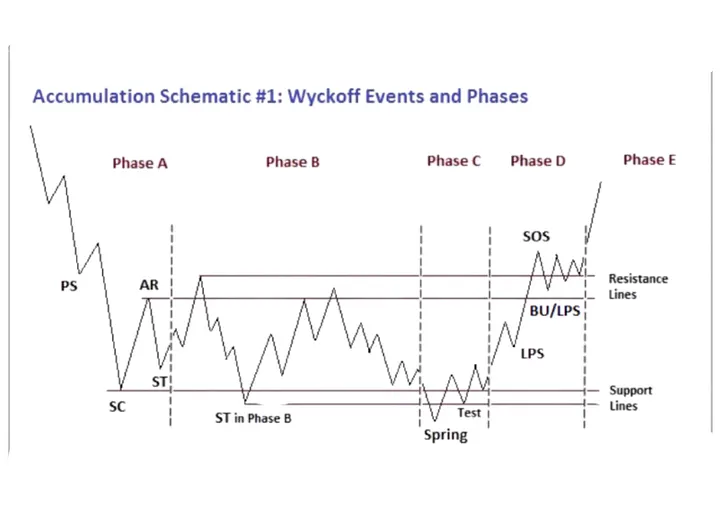
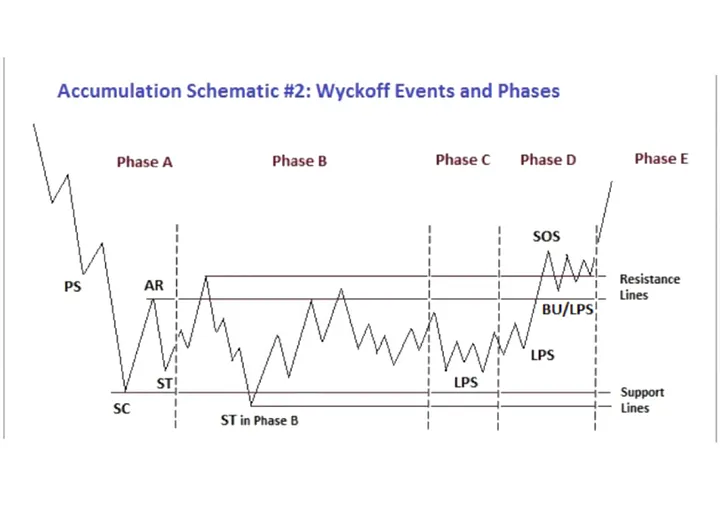
Bitcoin’s history has been characterised by powerful cyclical behaviour.
Each cycle has differed in magnitude and duration, but several common themes have repeatedly emerged.
Typically, markets progress through:
Accumulation
Periods of pessimism and low public interest.
Expansion
Growing participation and strengthening momentum.
Euphoria
Widespread optimism and excessive speculation.
Distribution
Increasing volatility and weakening momentum.
Correction
Sharp declines and renewed scepticism.
Understanding these phases can help investors avoid emotional decision-making.
Whilst no cycle unfolds exactly as expected, history demonstrates that investor psychology remains remarkably consistent.
Alderlux has monitored and recorded the changing of smaller cyclical behaviours. Expectations and parameters have had to evolve with these changes gradually since the initial introduction of Bitcoin ETFs. These changes are available in data and summary form in ‘The Edge’.
Investor Psychology: The Most Underrated Variable
At Alderlux, investor psychology remains one of the most important variables we monitor. Markets may be driven by data, but prices are ultimately moved by people.
Fear and greed continue to influence investment decisions just as they have throughout financial history.
During bull markets:
- Investors often underestimate risk.
- Expectations become unrealistic.
- Speculation increases.
During bear markets:
- Confidence evaporates.
- Long-term opportunities are overlooked.
- Investors become excessively pessimistic.
The ability to remain rational during periods of emotional extremes remains one of the most valuable skills an investor can develop.
Profit is the reward for managing risk.
Those who focus solely on profit often underestimate the role risk plays in preserving capital. Successful investing is not simply about maximising returns; it is about remaining in the game long enough for those returns to compound.
Risks Investors Should Not Ignore
Whilst the long-term Bitcoin thesis remains compelling, investors should remain aware of potential risks.
Regulatory Uncertainty
The regulatory environment continues to evolve globally.
Unexpected developments can create volatility.
Politics is the art of reconciling the inevitable future with the present capacity of people to understand and embrace it.
Liquidity Conditions
Bitcoin remains sensitive to broader financial conditions.
Periods of tightening liquidity can create headwinds.
Geopolitical Events
Global instability often influences investor behaviour and capital allocation decisions.
Market Expectations
Excessive optimism frequently creates conditions for corrections.
No market rises indefinitely.
What We Are Watching
At Alderlux, we are currently paying particular attention to:
- ETF capital flows
- Institutional adoption metrics
- Corporate treasury accumulation
- Global liquidity trends
- Interest rate expectations
- Regulatory developments
- Long-term on-chain activity
- Market cycle positioning
- BTC overall open interest
- BTC exchange liquidations
Together, these indicators provide a broader framework for understanding the current environment.
Further Research Available In The Edge
Members of The Edge receive ongoing analysis covering but not limited to:
- ETF flow monitoring
- Institutional adoption trends
- Market cycle analysis
- Open interest and liquidation data
- Bitcoin market structure reports
- Long-term strategic outlooks

Key Takeaways
- Institutional adoption continues to reshape the Bitcoin market.
- ETF participation has created new sources of demand.
- Global debt expansion remains a long-term tailwind for scarce assets.
- Investor psychology continues to drive cyclical behaviour.
- Risk management remains more important than short-term prediction.
Current Market Context
Bitcoin currently finds itself at the intersection of institutional adoption, increasing political recognition and a macroeconomic backdrop characterised by rising sovereign debt and ongoing concerns regarding currency debasement.
Unlike previous cycles, the market is now supported by multiple sources of demand. ETF participation, corporate treasury accumulation and broader institutional interest have created structural demand that simply did not exist during earlier market phases.
At the same time, investors should recognise that Bitcoin remains a volatile asset. Market corrections remain a normal feature of every cycle and should be expected rather than feared.
The key question facing investors is no longer whether Bitcoin is relevant. Increasingly, the question is how Bitcoin integrates into a broader investment and wealth preservation strategy.
Strategic Outlook
The medium-term outlook for Bitcoin remains constructive.
Institutional participation continues to increase regardless of inflows/outflows.
Adoption trends remain positive.
The long-term scarcity narrative remains intact.
At the same time, investors should remain prepared for volatility and periods of uncertainty.
Successful investing rarely involves predicting every market move correctly.
Instead, it involves understanding the broader landscape, managing risk appropriately and maintaining perspective when others lose theirs.
The coming months are unlikely to be without challenges.
However, the structural foundations supporting Bitcoin today appear considerably stronger than those of previous cycles.
For investors willing to take a long-term view, this remains one of the most fascinating developments in modern finance.
Markets will continue to fluctuate. Headlines will continue to change. Narratives will come and go. Yet those who dedicate themselves to understanding rather than reacting will always possess an advantage.
Because ultimately, the future favours the informed.