Foundations
What Is Bitcoin
.png)
What is Bitcoin?
A financial asset, a new technology, a means of transparency, all these things and more!
Bitcoin is both:
- a digital monetary network,
- and the native digital asset used within that network.
Imagine Bitcoin as a form of digital gold — a decentralised monetary network that exists entirely online, rather than as physical coins or banknotes.
Created in 2009 by the pseudonymous Satoshi Nakamoto, Bitcoin was designed to operate independently of governments, banks, or central authorities. Instead, it is maintained by a global network of computers that collectively verify and secure transactions through blockchain technology.
Bitcoin enables individuals to transfer value directly to one another without relying on intermediaries such as banks or payment providers. This allows transactions to be conducted securely, transparently, and often more efficiently — particularly across international borders.
In simple terms, Bitcoin can be thought of as a way to send money as easily as sending an email, but without requiring a company such as PayPal or a traditional financial institution to process the transaction.

Despite widespread speculation, the true identity of Satoshi Nakamoto has never been publicly confirmed. However, Adam Back is our pick for Satoshi Nakamoto — Link
Bitcoin can also be viewed as an investment asset, in a similar way to equities, commodities, or precious metals such as gold. Its value is determined largely by supply, demand, adoption, and market sentiment, rather than the revenues or profits of an underlying company.
For newcomers, Bitcoin can be purchased through regulated digital asset exchanges, much like opening and funding a traditional brokerage account. Many investors are attracted to Bitcoin due to its finite supply, decentralised nature, and the growing adoption of digital assets by both individuals and institutions worldwide.
However, Bitcoin remains a highly volatile asset class. Prices can fluctuate significantly over short periods of time, meaning investors should approach the market with a long-term perspective and an understanding of the associated risks.
Security is also critically important. Unlike traditional bank accounts, digital assets are not protected in the same way by financial institutions. Bitcoin should therefore be stored securely using trusted wallets, strong passwords, and appropriate security practices.
Alderlux provides private educational guidance designed to help clients understand Bitcoin securely, strategically, and with greater confidence in an evolving digital landscape.
The information provided by Alderlux is intended solely for educational and informational purposes and should not be considered financial, investment, legal, or tax advice.
Before making any investment decisions, including those involving Bitcoin, cryptocurrencies, or digital assets, individuals should conduct their own research and consult with a qualified and regulated financial adviser to ensure any decisions are appropriate for their personal financial circumstances, objectives, and risk tolerance.
Alderlux provides educational content and strategic digital asset guidance only. We do not provide financial advice, investment recommendations, or regulated financial services.
Understanding Blockchain Technology
When a transaction occurs on a blockchain network, it is grouped together with other transactions into a digital record known as a block.
Each block is secured using advanced cryptographic hashing, which ensures that once information has been recorded, it cannot be altered or tampered with. Rather than editing existing records, new blocks are added sequentially to the chain, creating a permanent and transparent ledger of all historical activity.
These blocks are cryptographically linked to one another, forming an immutable and verifiable chain of records. Before a new block can be added, participants within the network — commonly referred to as nodes — must collectively validate and approve the block through a consensus mechanism. This process helps maintain the integrity, accuracy, and security of the network.
The result is a decentralised and highly resilient system of record-keeping that underpins the security and trustworthiness of Bitcoin, cryptocurrencies, and broader blockchain technologies.
Put simply, once a block has been added to the blockchain, it cannot be changed or removed. Every participant within the network holds a copy of the ledger, making the system highly transparent, secure, and extremely difficult to manipulate.
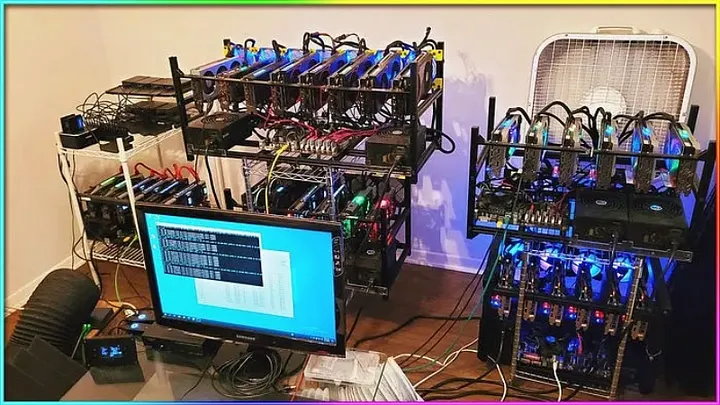
In the case of Bitcoin, specialised computers known as miners use significant computing power to solve complex mathematical problems. By doing so, they verify transactions and secure the network. In return for this work, miners are rewarded with newly created Bitcoin.
This process allows the blockchain to operate securely and reliably without the need for a central authority or intermediary.
Whilst blockchain technology is most commonly associated with Bitcoin, its potential applications extend far beyond digital currencies. Blockchain is already being explored and implemented in areas such as supply chain management, digital identity verification, secure record keeping, and future digital verification and record-management systems.
Comparison to Traditional Financial Systems
To better understand blockchain technology, it can be helpful to compare it with the traditional financial systems most people already use, such as banks and corporate accounting systems.
Blockchain vs Traditional Banking Systems
A traditional bank operates using a centralised ledger — a private database that records customer balances, deposits, withdrawals, and transactions. The bank controls and maintains this system, processes payments, applies fees, and ultimately decides how the network operates. Whilst highly efficient, the system relies heavily on trust in the institution managing it.
Blockchain technology approaches this differently.
Rather than being controlled by a single organisation, a blockchain ledger is distributed across thousands of independent computers around the world. Every participant within the network holds an identical copy of the ledger, and new transactions can only be added once the network collectively verifies and agrees they are legitimate through a consensus process.
In simple terms, it is similar to every customer and branch of a bank possessing a complete copy of the bank’s records, with every transaction requiring collective approval before it is permanently recorded. Because all copies must remain aligned, altering records secretly becomes extraordinarily difficult.
This decentralised structure significantly reduces the risks associated with a single point of failure. In a traditional banking system, a successful attack on the central infrastructure could compromise records or services. In contrast, altering the Bitcoin blockchain would require controlling the majority of the global network simultaneously — something considered practically impossible at Bitcoin’s current scale.
Security and Ownership
Traditional financial institutions rely on security measures such as passwords, firewalls, internal controls, and regulatory oversight to protect customer accounts.
Blockchain technology adds an additional layer through advanced cryptography. Bitcoin ownership is secured through a combination of:
- a public address, similar to an account number,
- and a private key, which functions like a highly secure password known only to the owner.
The private key grants control over the assets associated with that wallet. Unlike a bank account, however, there is no central authority capable of resetting or recovering access if those credentials are lost. This creates a system that is highly resistant to centralised compromise, whilst also placing greater personal responsibility on the individual.
Alderlux provides educational guidance designed to help clients understand appropriate digital asset security practices and long-term storage solutions.
Comparison to Corporate Systems and Record Keeping
Blockchain technology can also be compared to traditional corporate accounting systems.
Large organisations maintain internal ledgers that track revenues, expenses, assets, inventory, and financial activity. These records are generally private and controlled internally, with external audits conducted periodically to verify accuracy and compliance.
Blockchain introduces a fundamentally different model.
Public blockchains such as Bitcoin create transparent and immutable records that can be independently verified at any time. Once information has been recorded, it cannot easily be altered or removed. This creates a continuously auditable and independently verifiable history of transactions, rather than relying solely on periodic internal reviews or reporting processes.
In this sense, blockchain can be viewed as a continuously updated and independently verified ledger system, where network participants collectively validate activity rather than relying on a single organisation or intermediary.
Beyond digital currencies, this technology is increasingly being explored for applications including:
- supply chain tracking,
- digital identity verification,
- secure record keeping,
- asset tokenisation,
- and secure digital verification and governance systems where transparency and auditability are essential.
Why This Tech Matters Beyond Bitcoin
Blockchain technology extends far beyond cryptocurrencies alone. Much like the early internet in the 1990s, many view blockchain as a foundational technology capable of supporting a wide range of future applications and innovations.
Today, organisations around the world are exploring blockchain solutions for areas such as supply chain management, secure record keeping, digital identity verification, and future voting systems. For example, blockchain technology can provide transparent and verifiable tracking throughout a supply chain, allowing products and goods to be traced accurately from origin to consumer. Similarly, blockchain-based voting systems have the potential to increase transparency and reduce the risk of tampering within electoral or governance processes.
The reliability, transparency, and decentralised nature of blockchain technology are also key reasons why some investors refer to Bitcoin as “digital gold”. Bitcoin has a fixed supply of 21 million coins, making it inherently scarce. Unlike traditional fiat currencies, which can be expanded by central banks, Bitcoin operates independently of governments and corporations, with its monetary policy embedded directly into the protocol itself.
As a result, Bitcoin is viewed in different ways by different individuals. Some view Bitcoin primarily as a long-term store of value or alternative monetary asset, whilst others are more interested in the underlying blockchain technology and its broader potential to reshape aspects of finance, infrastructure, ownership, and digital systems in the years ahead.
Follow the link for what we believe to be the best ever explanation of Bitcoin: Link
Balanced Perspective
As with any emerging technology or asset class, Bitcoin and digital assets involve both opportunity and risk. Whilst many believe blockchain technology may play an increasingly important role in the future of finance and digital infrastructure, adoption remains ongoing and the sector continues to evolve rapidly.
Individuals should approach the space with a long-term perspective, appropriate research, and an understanding that digital assets can experience significant volatility.
At Alderlux, we view Bitcoin as a transformative technology with the potential to play a significant role in the future of business, finance and digital infrastructure. Whilst adoption continues to grow globally, we believe the technology remains in the early stages of its development, with much of its long-term potential still yet to be fully realised and understood.
As digital assets continue to mature, the ability to understand Bitcoin beyond headlines and speculation may become increasingly valuable in navigating the future financial landscape.
This article is provided for educational purposes only and does not constitute financial advice.
ALDERLUX is a private Bitcoin and digital asset education platform focused on helping investors, professionals, and strategic thinkers better understand the evolving financial landscape. Through structured insight, long-term perspective, and calm analysis, ALDERLUX explores Bitcoin, digital assets, and broader macroeconomic trends with a focus on clarity over speculation. Guided by the philosophy that “The Future Favours The Informed,” the platform is designed for those seeking a deeper understanding of digital wealth and the future of finance.